


Operator to Aviator: Why 3D Airmanship May Be the Future of Drone Professionalism
By: Colonel (ret) Bernie Derbach, KR Droneworks, 22 Jan 26

In the drone industry, we often obsess over the "what"—what sensors we have, what the regulations say, and what the aircraft can do. We study for the Part 107 or Basic/Advanced exams, get our certificates, and consider ourselves pilots.
But having a license doesn't make you an aviator. A license makes you legal; airmanship makes you safe.
This distinction is the driving force behind 3D Airmanship, a training program designed to bridge the gap between passing a test and mastering the art of flight. It challenges the "wild west" culture of civilian drone operations by introducing the disciplined, rigorous mindset of professional manned aviation.
The Architect: Major David Cooke (Ret’d)
The credibility of any training program rests on its creator, and 3D Airmanship is built on a bedrock of elite aviation experience. The program is the brainchild of Major David Cooke (Ret'd), a former RCAF Combat Flying Instructor and Test Pilot.
Cooke’s career didn't just involve flying; it involved teaching the best of the best. As a Flight Test Instructor at the International Test Pilots School (ITPS), he worked with pilots who operated with uncompromising precision. He realized that while military and test pilots practice "Deliberate Airmanship"—a constant, disciplined cycle of planning, execution, and debriefing—most commercial drone operators were never taught these survival skills.
Cooke founded CANDA Inc. and 3D Airmanship to fix this. His mission is simple: to transfer the life-saving discipline of a Test Pilot into the hands of the modern drone operator.
Program Review: Disciplined, Decisive, Deliberate
The 3D Airmanship curriculum is not a rehash of the regulations you already know. Instead, it targets the "Human Operating System"—the pilot’s own attitude, fitness, and decision-making processes.
Delivered through a series of over 60 micro-learning videos (5-10 minutes each), the program is designed to be consumed daily, building professional habits over time. The core philosophy is encapsulated in the "3D" motto: Disciplined, Decisive, and Deliberate.
Core Pillars of the Training:
The Wake-Up Call: The training begins by stripping away complacency. Modules like "How Lethal is Your Drone" and "1K Wonders Miniaturization" force pilots to respect the kinetic energy and potential danger of their aircraft, regardless of its size.
The Psychology of Flight: Through the "Zen & The Art of Drone Happiness" series, pilots learn that safety starts in the mind. Cooke teaches that "It’s YOUR ATTITUDE that determines your Attitude," helping operators recognize how ego, stress, and external pressure can compromise flight safety.
Fit-to-Fly: A drone pilot is an aviation system component. The curriculum covers often-overlooked factors like diet, hydration, and environmental stress. It asks the hard questions: Are you physically and mentally primed for this mission?.
Mission Discipline: This is where the "amateur" separates from the "pro." The program instills rigorous workflows for "Mission Briefing," "Risk Assessment," and crucially, "The Debrief"—the feedback loop essential for continuous improvement.
The goal is to move beyond simple proficiency (flying the drone well) to true airmanship (managing the mission, the environment, and yourself safely).
The Viper 7 AI and the Modern Classroom
Recognizing that modern operators need agility, 3D Airmanship has evolved beyond static video lectures. The program integrates the Viper 7 AI, a digital mentor designed to support the pilot's journey through the curriculum.
This AI component acts as a force multiplier for the training. It allows for a more responsive learning environment where pilots can query specific airmanship concepts or operational scenarios, ensuring that the "Deliberate" mindset is accessible 24/7. It transforms the course from a one-time viewing experience into an ongoing "Community of Practice."
Coupled with the micro-learning format, this tech-forward approach respects the pilot's time. Whether you are waiting for batteries to charge or prepping for a shoot, the training fits into the workflow of a working professional. It reinforces the idea that airmanship isn't a badge you earn once; it’s a daily practice.
Why "Drone Professionalism" is the New Standard
You might ask, "Why do I need military-grade discipline to fly a Mavic?"
The industry is changing. With the advent of complex operations like BVLOS (Beyond Visual Line of Sight) and upcoming regulations like FAA Part 108, the era of the casual operator is ending. Regulators and high-end clients are no longer just looking for a license; they are looking for Safety Management Systems (SMS) and proof of a safety culture.
3D Airmanship prepares you for this shift. It teaches you to:
Anticipate the "Subconscious Wind and Sun": Proactively planning for environmental factors rather than reacting to them.
Delegate Wisely: Using automation effectively to free up your mental bandwidth for decision-making.
Own the Risk: conducting "Test Flight" style assessments on your own operations to catch errors before they become incidents.
Conclusion
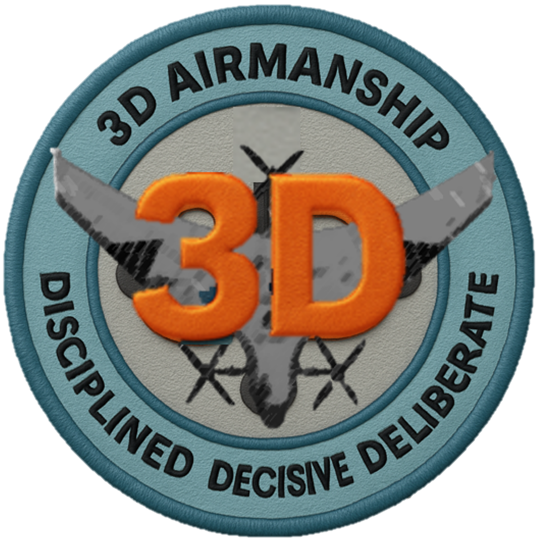
Graduates of the program earn the 3D Airmanship Shoulder Badge, but more importantly, they earn a new mindset. In a crowded market, being a "3D Pilot"—Disciplined, Decisive, and Deliberate—is a powerful differentiator.
As Major Cooke reminds us, "Flight Safety is no Accident". It is a choice we make every time we prop up. 3D Airmanship provides the tools to make that choice correctly, every single flight.
To learn more about elevating your operations, visit www.inskyphoto.com.

Comments