


Elevate Your Drone Operations: A Blueprint for a Canadian RPAS Human Factors "Train the Trainer" Program

The Canadian drone industry is maturing rapidly. As operations become more complex—moving beyond simple visual line-of-sight (VLOS) flights into advanced and complex missions—the margin for error shrinks. While technical skills are crucial, history in manned aviation tells us that the human element is often the weakest link in the safety chain.
This article outlines a comprehensive Train the Trainer program designed specifically for Canadian RPAS operators. Based on proven aviation principles and adapted for the unique challenges of remote piloting under Transport Canada's regulations, this framework will empower your organization to build a robust internal safety culture from the ground up.
Why Generic Aviation Human Factors Don't Cut It
You can't just take a Human Factors (HF) course designed for airline pilots and expect it to resonate with a drone operator. The fundamental challenges are different. A manned pilot gets immediate, physical feedback from the aircraft—the "seat-of-the-pants" feel. A remote pilot is physically disconnected, relying entirely on a data link and a 2D screen.
Our proposed Train the Trainer program addresses this head-on. It focuses on the unique psychological and physiological hurdles of remote piloting, such as:
The Disconnection Effect: How being physically separated from the aircraft alters risk perception.
Automation Bias: The dangerous tendency to over-trust "smart" features like GPS-hold and Return-to-Home, leading to complacency.
Information Overload: Managing the split attention between a complex Ground Control Station (GCS) display and maintaining visual line of sight with the aircraft.
Adapting the Classics for the Canadian RPAS Reality
The core of any good HF program is understanding human error. We adapt classic aviation concepts like "The Dirty Dozen" (the 12 most common precursors to error) and re-map them to the drone world, directly linking them to Canadian Aviation Regulations (CARs) Part IX.
For example, Distraction isn't just a flight attendant asking a question; it's a member of the public walking up to your pilot during a critical phase of flight. Complacency isn't just an old hand skipping a checklist; it's relying on an outdated site survey because "it's probably fine."
We explore these concepts through the lens of TP 15263 (Knowledge Requirements for Pilots of Small RPAS) and CARs 901.19 (Fitness of Crew Members), ensuring your training is not only practical but also regulatory compliant.

Subtext: A classic breakdown in Crew Resource Management (CRM). A distracted pilot and a visual observer not working as a cohesive team is a recipe for an incident. HF training addresses these exact scenarios.
Teaching the Teachers: Moving Beyond "Death by PowerPoint"
Knowing the material is one thing; teaching it effectively is another. A "Train the Trainer" program must equip your instructors with the skills to engage adult learners. We move beyond dry regulation recitals and focus on dynamic, scenario-based training.
Key instructional techniques covered include:
Andragogy (Adult Learning Principles): Understanding that adult students need to know why they are learning something. Connect every regulation back to a real-world safety benefit, not just legal compliance.
The Case Study Method: Using real-world, anonymized RPAS incident reports to generate discussion and analysis. This allows students to learn from others' mistakes in a safe environment.
Creating a "Just Culture": Fostering a classroom environment where students feel comfortable admitting their own past errors without fear of judgment. This is where the most powerful learning happens.
Facilitation over Lecturing: Transforming your instructors from "sages on a stage" to guides on the side, facilitating discussions and table-top exercises that challenge students to apply their knowledge.

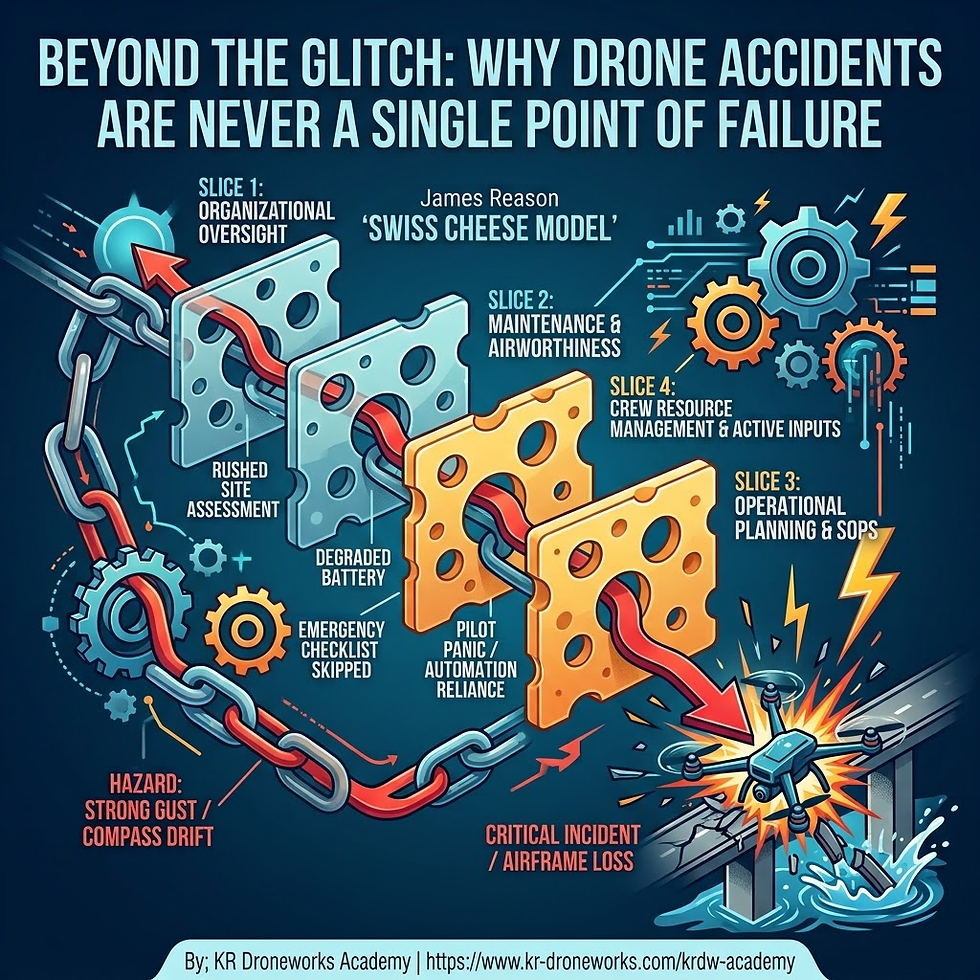
Subtext: Effective training involves engaging students with proven concepts like the "Swiss Cheese Model" of accident causation, adapted for the specific risks of drone operations.
Practical Application: The Final Exam
The ultimate goal is to produce competent internal trainers. The final component of the program involves candidates developing and delivering their own 20-minute HF teaching module. They must choose a relevant topic—such as "Managing Interruptions during Pre-flight Checklists"—and teach it to the class, citing specific Transport Canada guidance.
This "teach-back" session is critiqued by the master instructor and peers on technical accuracy, engagement level, and instructional technique. It ensures that your new trainers are ready to deliver high-quality, compliant Human Factors training within your organization.
By investing in a specialized RPAS Human Factors Train the Trainer program, you aren't just ticking a regulatory box. You are building a team of safer, more professional, and more effective pilots who are equipped to handle the complexities of the modern Canadian airspace.

Comments