


What Happened in the Drone Universe this Past Week of 28 June 26
By: Colonel (ret) Bernie Derbach, KR Droneworks Academy, 28 June 26

Welcome back to your weekly briefing on the fast-evolving unmanned systems sector. This week has seen massive regulatory leapfrogging, high-stakes military integration, and real-world enforcement tests that show exactly where the industry is heading as we cross the mid-point of 2026.
1. Global Analysis: The Hyper-Growth Industrial Shift
The global drone market has firmly transitioned from an experimental phase into a specialized, high-stakes enterprise ecosystem. A landmark report released this week by Valour Consultancy forecasts that the global commercial Unmanned Aircraft Systems (UAS) fleet will cross 5.6 million aircraft by 2050, driven heavily by mature agricultural networks and enterprise inspection infrastructure.
eVTOL Insights
The macro trend of 2026 is fleet diversification. Driven by insurance requirements and strict data security compliance, enterprise operators are moving away from single-source hardware portfolios. Insurance companies are now actively offering lower premiums to fleets using hardware with proven flight hours, robust digital tracking, and accessible component pipelines. Artificial Intelligence (AI) has shifted from a buzzword into core workflow automation, particularly in predictive omnidirectional obstacle avoidance and direct cloud-based edge editing while the aircraft is still airborne.
Drone Doctor+ 3
2. Asia & China: Agritech Dominance & Legal Standoffs
Asia—and China in particular—remains the undisputed powerhouse of high-volume drone deployment.
Agricultural Maturity: The commercial drone market's single largest mature vertical is Chinese precision agriculture. DJI alone now commands an active fleet of over 300,000 spray drones across mainland China, setting a global benchmark for scalable Beyond Visual Line of Sight (BVLOS) agricultural operations.
The Regulatory Battle: On the corporate front, DJI continues to hold roughly 70% of the global market share. However, the company remains locked in heavy federal litigation to overturn the FCC's recent model restrictions. This has accelerated a sharp bifurcation in the market: commercial buyers are split between maximizing the raw value of existing DJI hardware and actively onboarding non-Chinese alternatives to future-proof their operations.
Drone Doctor
3. EU & UK: Next-Gen Warfare & Salisbury Limitations
Europe and the UK focused heavily on defense automation and regulatory boundaries this week.
Defence
AUKUS Swarm Tactics: The AUKUS alliance (Australia, US, and UK) wrapped up a massive three-week trial on the Salisbury Plain as part of the Army Warfighting Experiment 2026. Soldiers successfully deployed collaborative AI-programmed autonomous drone swarms to scan, identify, and clear targets in complex woodland environments.
Defence
UK Defense Investment: The UK Ministry of Defence announced a £500 million investment plan to transform the elite Commando Force, prioritizing the immediate integration of next-generation tactical drones directly into frontline hands.
The Airspace Dilemma: Despite the success of the Salisbury exercises, dense peacetime civil aviation regulations in the UK are stifling advanced military testing. Because of these domestic airspace restrictions, the British Army announced that hundreds of personnel from the 2nd Battalion, Parachute Regiment, are transferring to Canada this July for Exercise Rhino Biz to safely execute large-scale drone and electronic warfare (EW) drills.
4. USA: Standardizing the Compliant Airspace
In the United States, case-by-case waivers are officially a thing of the past. The Federal Aviation Administration (FAA) is pushing hard into risk-based frameworks like the Specific Operations Risk Assessment (SORA) and standardized Detect-and-Avoid (DAA) criteria to scale complex BVLOS corridors.
Precision Engineering Supply
With Remote ID now fully enforced across the country, "Blue UAS" and NDAA-compliant alternatives are seeing massive enterprise adoption. Platforms like the Skydio X10 and the ACSL SOTEN have become standard fixtures for federal and critical infrastructure contracts, benefiting significantly from pre-filed Declarations of Compliance that remove administrative friction for enterprise fleets right out of the box.
Precision Engineering Supply+ 1
5. Extensive Canadian Analysis: A Massive Regulatory Pivot
Canada is the center of the drone universe this June, experiencing a perfect storm of regulatory re-writes, major sporting events, public safety incidents, and international defense collaborations.
The Regulatory Bombshell: NPA 2026-005
Transport Canada dropped Notice of Proposed Amendment (NPA) 2026-005, signaling the most sweeping overhaul of Canadian drone regulations since Part IX was introduced in 2019. The proposal focuses on three core pillars designed to lay the groundwork for automated RPAS Traffic Management (RTM):
Drone News & DJI Rumors
Regulatory Pillar | What It Means for Operators |
Performance-Based Remote ID | Mandatory by 2030 for all drones between 250g and 150kg. Crucially, Canada is including a Network Remote ID option (cellular/satellite streaming) alongside Broadcast Remote ID (Wi-Fi/Bluetooth)—a pathway the US FAA famously dropped. |
Community-Based Organizations (CBO) | A major win for traditional clubs and model aviators. Approved non-commercial groups can declare permanent Fixed Sites. Within these boundaries, members get total relief from Remote ID, can fly up to 35kg models, exceed 400 feet in uncontrolled airspace, and fly FPV without a visual observer. |
Designated RPAS Airspace | Replaces old, clunky restriction mechanisms with real-time digital geo-zones below 400 feet. Manufacturers must build geo-awareness software into systems to warn pilots, though it stops short of an automatic takeoff lockout. |
⚠️ Take Note: Transport Canada is accepting written stakeholder feedback on NPA 2026-005 until September 9, 2026. Current Basic or Advanced certificate holders will not need to re-write exams; standard recency activities will cover the update.
Real-World Enforcement: FIFA World Cup 2026
The FIFA World Cup 2026 is officially underway in Toronto, serving as a live pressure test for urban counter-UAS enforcement. The Toronto Police Service confirmed they have intercepted 18 drones flying illegally in restricted airspace around Toronto Stadium and the Fan Festivals since June 10. Police noted that most operators were simply enthusiastic fans unaware of the strict "no-fly over advertised events" rule. For now, police are issuing $250 administrative monetary penalties rather than seizing hardware, though enforcement remains on high alert.
www.cbc.ca+ 1
Public Safety Spotlight: Ponoka Stampede Crash
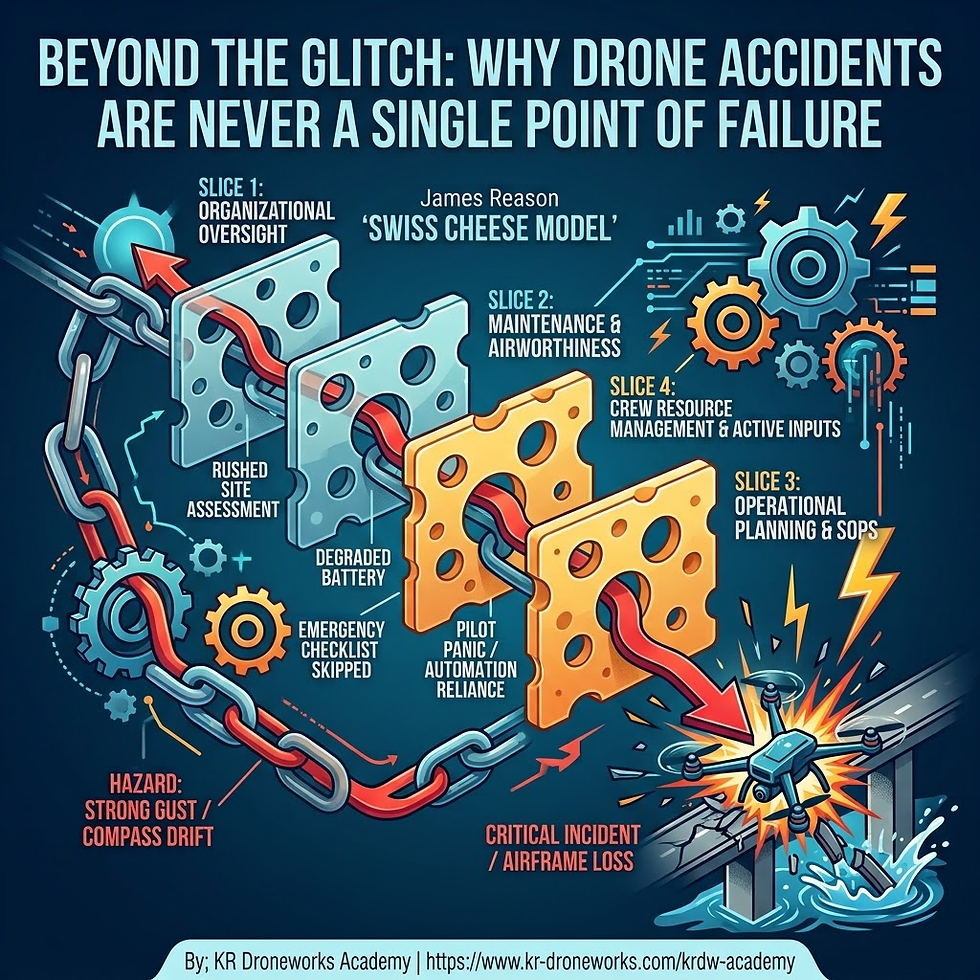
Drone safety compliance became a major national talking point following an accident at the Ponoka Stampede in Alberta on June 25. An operator lost control of a heavy DJI Inspire platform, causing the drone to plunge directly into the crowded grandstands and injure two spectators. The incident has brought sharp scrutiny to operational safety assurances, especially as Transport Canada enforces stricter compliance for Level 1 Complex (L1C) and advanced crowdside operations.
www.cbc.ca+ 1
Sovereign Industrial Defense: The Airlogix-Sentinel Pact
Building on momentum from the recent CANSEC defense expo in Ottawa, the Canadian Department of National Defence and the Ministry of Defence of Ukraine signed a formal manufacturing pact. Under this bilateral agreement, Ukrainian defense tech firm Airlogix is partnering with Canadian UAS builder Sentinel R&D to establish joint assembly lines in Canada. The advanced tactical drone systems produced on these Canadian lines are earmarked for immediate export to the Armed Forces of Ukraine, fulfilling Canada's strategic commitment to fund localized drone and electronic warfare production.
The Watch+ 2
Cultural Shift: Eco-Friendly Canada Day
With July 1st just days away, a massive shift in Canadian entertainment is visible. Municipalities like Manotick and Eganville in Ontario have officially canceled traditional fireworks in favor of 3D synchronized drone light shows handled by Ottawa's Capital Drone Show. Driven by recent summer fire bans, environmental concerns, and the stampede accident reminding officials of pet safety, these 200-to-500-drone arrays are fast becoming the new standard for Canadian civic celebrations.
References & Links
Regulatory Framework: Transport Canada NPA 2026-005 Portal
Industry Analysis: Valour Consultancy: The Future of Commercial Drones 2026
eVTOL Insights
Defense & Swarming: Australian Department of Defence: AUKUS Salisbury Plain Trials
Enforcement Actions: CBC News: Toronto Police Counter-UAS FIFA Intercepts
Detailed Regulatory Guidance: KR Droneworks Flight School: Deep-Dive Analysis on Canada's NPA 2026-005


Comments