


What Happened in the Drone Universe This Week, January 9, 2026
- krdroneworks
- Jan 9
- 4 min read
Edition: January 9, 2026
By; Colonel (ret) Bernie Derbach, KR Droneworks, 09 Jan 26
Theme: The Integration Age — From Novelty to Necessity

Part I: The Global Landscape – The "Unmanned Supercycle" and AI Autonomy
As we enter the second week of January 2026, the global drone industry is no longer characterized by "future potential." It is characterized by mass-scale deployment. The global market cap for Unmanned Aerial Systems (UAS) has officially crossed a new threshold, driven largely by the convergence of edge-computing AI and the geopolitical shift toward "attributable" (low-cost, replaceable) platforms.
1. The Geopolitics of Attrition
The conflict landscapes of late 2025 have fundamentally rewritten the procurement playbooks for 2026. The U.S. Department of Defense's "Replicator" Initiative has reached its 2.0 phase. This week, reports indicate that the focus has shifted from simple FPV (First Person View) drones to autonomous swarm interceptors.
The Hardware Shift: We are seeing a move away from the $100,000+ reconnaissance drone toward $5,000 "loitering munitions" that operate with mesh networking. This allows a single operator to manage a swarm of 20+ units that can communicate with one another to identify and prioritize targets without a continuous GPS link.
The "Silicon Shield": Taiwan’s drone industry reported a 40% increase in export intent this week, positioning itself as the "non-DJI" alternative for Western nations seeking secure supply chains.
2. The Hydrogen Frontier: H3 Dynamics and Beyond
The 12-hour flight record set by H3 Dynamics this week in Singapore is a watershed moment. For years, the "energy density" problem has limited multi-rotor drones to 20-40 minutes of flight.
Technical Deep Dive: By using a gaseous hydrogen fuel cell paired with a small buffer battery, the power-to-weight ratio has finally surpassed high-end Lithium-Polymer (LiPo) setups.
Commercial Viability: This isn't just for record-breaking; it changes the math for Linear Infrastructure Inspection. A drone can now inspect 500km of pipeline in a single sortie, rather than requiring a ground crew to leapfrog every 15 kilometers to swap batteries.
3. Urban Air Mobility (UAM) and the "Noise War"
In Europe, the EASA (European Union Aviation Safety Agency) is facing pushback from the Global Drone Logistics Council. The proposal to limit drone noise to 55dB in residential areas at night is being called a "death knell" for 24/7 medical deliveries.
Innovation Trigger: This regulatory pressure is forcing manufacturers like Wing and Zipline to redesign propeller geometry. We are seeing a rise in toroidal propellers (closed-loop blades) which significantly reduce the high-pitched "whine" characteristic of traditional drones.
Part II: Focusing on Canada – The BVLOS Revolution
While the world focuses on swarms and hydrogen, Canada is quietly becoming the global leader in Regulatory Certainty. In the drone industry, "certainty" is the most valuable currency.
1. The New Part IX: Level 1 Complex Operations
As of January 2026, Transport Canada’s BVLOS (Beyond Visual Line of Sight) framework is the envy of the FAA. Under the new rules, "Complex" pilots can operate without a visual observer if they utilize approved DAA (Detect and Avoid) technology.
Case Study: The Prairie corridor. This week, a consortium of grain farmers in Saskatchewan began the first legal, unsegregated BVLOS crop-spraying operation. By using ground-based radar integrated with the drone’s flight controller, they are covering 5,000 acres a day with zero human presence in the field.
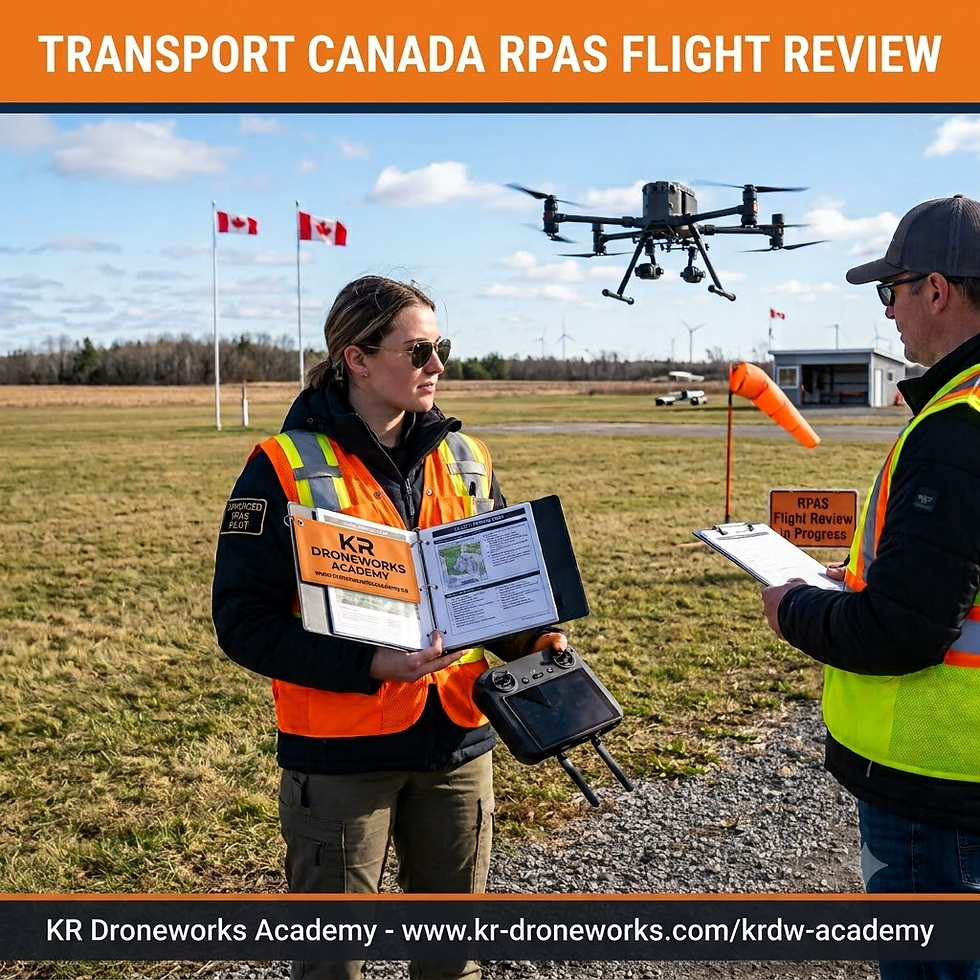
The Certification Ladder: Canada now has a three-tier licensing system: Basic, Advanced, and Complex. The "Complex" exam, which includes a rigorous flight review and a radio-telephony component, saw a 300% increase in applicants in the first week of January.
2. Arctic Sovereignty and "Operation NANOOK-Drone"
The deployment of the MQ-9B SkyGuardian in the High Arctic this week is more than a military exercise; it is a test of Canada’s digital infrastructure.
Satellite Latency: Operating a drone at 80° North requires a shift from traditional geostationary satellites to LEO (Low Earth Orbit) constellations like Starlink or Telesat’s Lightspeed.
Strategic Intent: The Canadian Armed Forces are proving that they can monitor the Northwest Passage in real-time. This week’s mission successfully tracked a non-NATO commercial vessel for 48 hours straight, providing high-definition thermal imaging despite the 24-hour darkness of the Arctic winter.
3. Drone Delivery Canada (DDC) and the "Vertical Mailroom"
The Toronto-Mississauga high-rise project is the first of its kind in North America.
The "Last Inch" Challenge: Delivering to a condo isn't about the flight; it's about the landing. DDC’s new Sparrow 2 drone uses a proprietary precision-landing system that docks with a "Smart Nest" on the roof.
Economic Impact: Property developers are now listing "Drone Delivery Enabled" as a premium amenity, similar to high-speed internet or a gym. This signals a shift in real estate value tied directly to aerial logistics.
Part III: Technical Trends & Safety Standards
The Rise of "C-UAS" (Counter-UAS) in Canada
With the proliferation of drones comes the fear of their misuse. This week, the Ottawa International Airport (YOW) began testing a passive RF-detection system that can identify not just the drone, but the location of the pilot.
Privacy vs. Security: This has sparked a legal debate in Canada regarding the interception of radio signals. However, the federal government seems poised to grant airports "Kinetic Neutralization" rights (the ability to jam or down a drone) by the end of Q3 2026.
Part IV: References & Further Reading
Transport Canada (2026): Advisory Circular 903-002: Requirements for Level 1 Complex BVLOS Operations. [Government of Canada Portal]
International Drone Intelligence (IDI) Report: The 2026 Unmanned Supercycle: Procurement Trends in the NATO Bloc.
H3 Dynamics Press Release (Jan 5, 2026): Breaking the 12-Hour Barrier: Hydrogen Flight in Tropical Climates.
Journal of Unmanned Vehicle Systems: Toroidal Propellers and the Mitigation of Urban Noise Pollution.
Canadian Defence Review: Projecting Power North: The MQ-9B SkyGuardian in Arctic Patrols.
Summary of the Week
Trend | Market Impact | Status |
BVLOS Integration | Massive for Canadian Ag & Oil/Gas | 🟢 Active |
Hydrogen Propulsion | Long-range logistics viable | 🟡 Scaling |
Swarm Autonomy | Redefining modern defense | 🔴 High-Conflict Usage |
Urban Noise Regs | Hardware redesign required | 🟠 Developing |
Closing Thoughts
The first two weeks of 2026 have proven that the "Drone Universe" is no longer a niche hobbyist space. It is a multi-billion dollar pillar of national security and economic efficiency. In Canada, we are seeing the fruition of years of regulatory patience, turning the Great White North into a global testbed for long-range, autonomous operations.


Comments