


The Power of the Leash: Exploring Tethered Drones
By: Colonel (ret) Bernie Derbach, KR Droneworks, 29 Dec 25
Drones have revolutionized various industries, offering unprecedented aerial perspectives and capabilities. However, their operational time and range are often limited by battery life. Enter the tethered drone: a fascinating solution that marries the flexibility of a UAV with the extended endurance of a ground-based power source.
What are Tethered Drones?
Tethered drones, also known as wired drones or power-over-tether drones, are UAVs that remain physically connected to a ground station via a specialized cable. This tether serves multiple crucial functions:
Continuous Power Supply: Unlike traditional drones reliant on internal batteries, tethered drones receive a constant power supply from the ground station. This eliminates the need for frequent battery swaps, allowing for indefinite flight times (limited only by the lifespan of the drone components and the ground station's power source).
Secure Data Transmission: The tether often includes fiber optic cables, enabling high-bandwidth, secure, and reliable data transmission between the drone and the ground station. This is particularly valuable for applications requiring real-time, high-definition video feeds or sensitive data transfer.
Enhanced Stability and Safety: The physical connection to the ground station can contribute to greater stability, especially in challenging weather conditions. Some systems also incorporate the tether as a safety mechanism, preventing flyaways in case of GPS signal loss or other malfunctions.
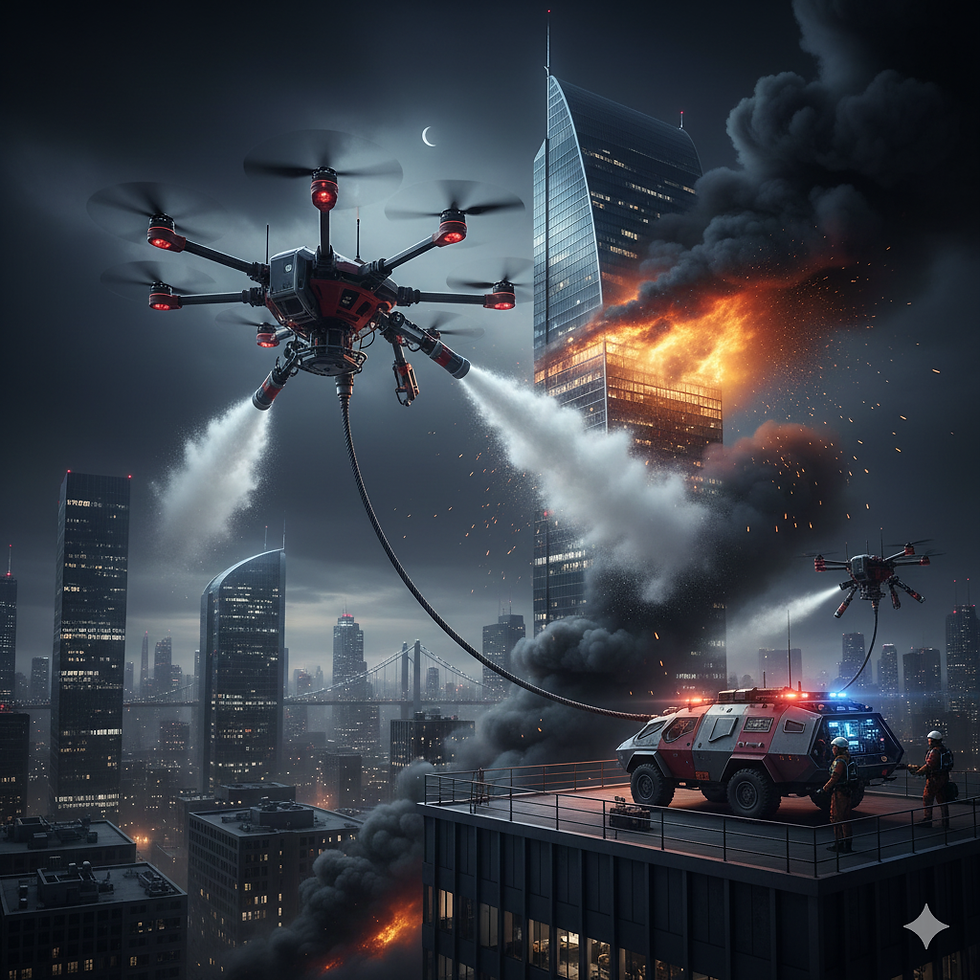
Here's an example of a tethered drone system in operation:

What Can They Do?
The extended endurance and secure communication offered by tethered drones open up a vast array of applications across various sectors:
Persistent Surveillance and Security: For long-term monitoring of critical infrastructure, event security, border patrol, or disaster areas, tethered drones can provide continuous aerial oversight without interruption. Imagine a drone hovering above a concert venue, providing live feeds for hours.
Telecommunications and Temporary Networks: In areas with damaged infrastructure or during large gatherings, tethered drones can act as temporary cellular towers or Wi-Fi hotspots, providing crucial communication links.
Broadcasting and Live Events: The ability to hover for extended periods with a stable, high-definition camera makes them ideal for live event coverage, offering dynamic aerial shots for sports, concerts, or news reporting.
Industrial Inspections: Inspecting tall structures like wind turbines, cell towers, or bridges often requires significant setup and limited flight times for traditional drones. Tethered drones can provide continuous inspection capabilities, improving efficiency and safety.
Emergency Response and Disaster Management: In scenarios like search and rescue, wildfire monitoring, or flood assessment, tethered drones can provide continuous situational awareness to emergency responders.
Here's a tethered drone providing surveillance over a city:

Why Transport Canada Regulations Might Not Fully Apply (and Considerations)
This is where it gets interesting. Transport Canada (TC) regulations for drones, primarily outlined in Canadian Aviation Regulations (CARs) Part IX – Remotely Piloted Aircraft Systems, generally focus on un-tethered, free-flying drones. The fundamental premise of many of these regulations revolves around the potential for uncontrolled flight, loss of control, and collision with other aircraft or people.
While specific interpretations can vary, several aspects of tethered drones may lead to them being considered differently under certain circumstances:
Loss of Control/Flyaway Risk: A significant concern with traditional drones is the risk of a "flyaway" due to signal loss or system malfunction. The physical tether on a tethered drone inherently mitigates this risk. The drone is physically constrained to a specific area determined by the tether's length and the ground station's position.
Operational Ceiling: Most tethered drone systems operate at relatively low altitudes, often below 100-150 meters (300-500 feet), due to the practical limitations of cable length and weight. This often places them below typical airspace where manned aircraft operate, reducing collision risk.
Continuous Human Oversight: Tethered drones are almost always operated with constant human supervision at the ground station, allowing for immediate intervention.
"Aircraft" Definition Nuance: The definition of an "aircraft" under the Aeronautics Act and CARs often implies independent flight capability. While a tethered drone can fly, its dependence on a continuous ground connection for power and control could, in some interpretations, differentiate it from a completely "free-flying" aircraft.
However, it's crucial to understand that "not fully apply" does NOT mean "no regulations apply at all." Operators of tethered drones in Canada still have significant responsibilities, including:
Safety of Operations: Even if specific drone regulations are less stringent, operators are always responsible for conducting safe operations and not endangering people or property. This falls under general aviation safety principles.
Site-Specific Risk Assessment: A thorough risk assessment should always be conducted for any tethered drone operation, considering factors like population density, proximity to airports, and potential hazards.
Visual Line of Sight (VLOS): While the tether helps prevent flyaways, maintaining VLOS (Visual Line of Sight) with the drone is still generally a best practice and often a regulatory requirement for RPAS operations.
Manufacturer Guidelines: Adhering to the manufacturer's operational limits and safety recommendations is paramount.
It is highly recommended that anyone considering operating a tethered drone in Canada contact Transport Canada directly for clarification on specific applications and to ensure full compliance with all applicable regulations. This is particularly important for novel or complex operations.
Here's an illustration of a tethered drone in an urban environment, highlighting the need for careful consideration of its operation:


Comments