


Eyes in the Sky - Canadian Veterans & The Drone Revolution
By: Colonel (ret) Bernie Derbach, KR Droneworks, 30 Jan 26

Transitioning from a life of military service to a civilian career is a monumental shift, but for Canadian Armed Forces (CAF) veterans, the "Eye in the Sky" offers a familiar and lucrative vantage point. Drone operations—formally known as Remotely Piloted Aircraft Systems (RPAS)—is one of the fastest-growing sectors in Canada.
For a veteran, this isn't just a job; it’s a natural extension of the skills forged in uniform. Here is the complete guide to why and how veterans are leading the drone revolution in 2026.
1. Why Military Training is the Ultimate "Flight School"
The civilian drone industry is no longer about hobbyist toys; it is about mission success, safety, and technical precision. Veterans possess the "hard-to-teach" traits that top-tier firms demand:
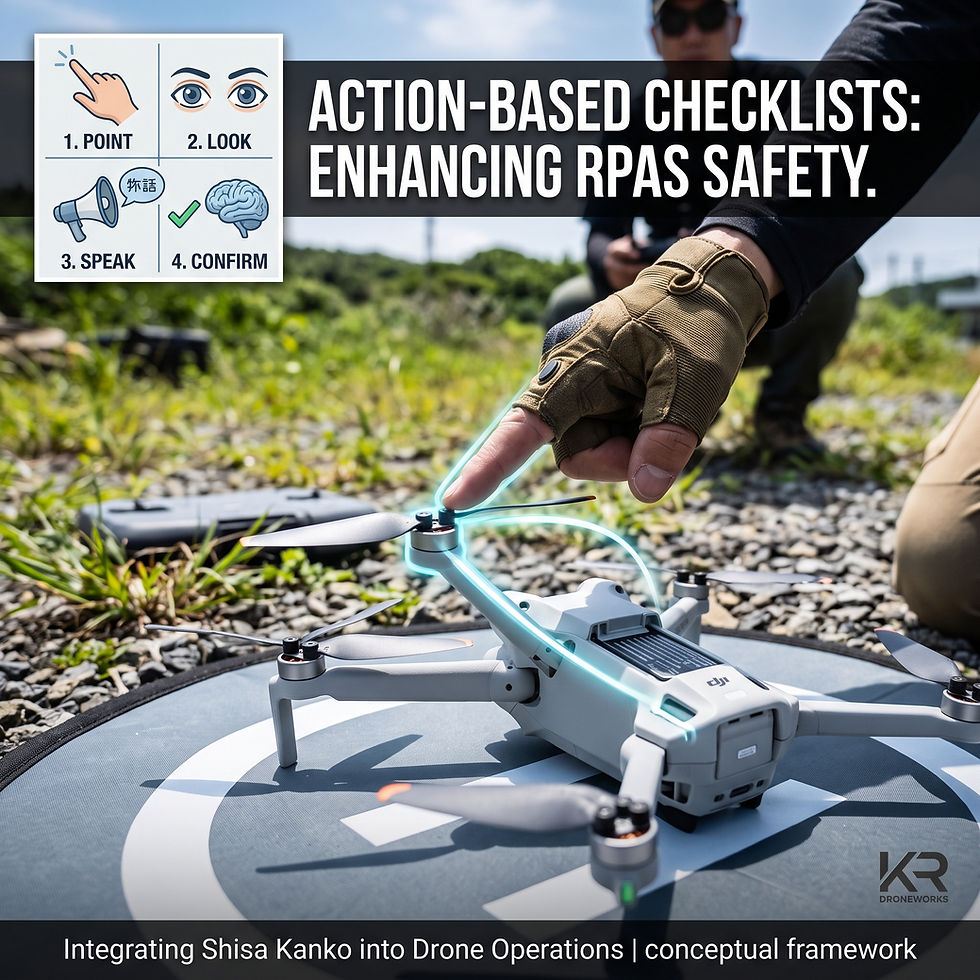
Airmanship & Discipline: Veterans live by Standard Operating Procedures (SOPs). In the drone world, a missed checklist item can mean a $30,000 crash; for a veteran, a pre-flight routine is second nature.
Situational Awareness: Whether from the infantry, navy, or air force, the ability to read terrain, monitor weather, and maintain 360-degree awareness is ingrained.
Technical Adaptability: CAF members are trained on complex weapon systems and sensors. Transitioning to LiDAR, thermal imaging, or multispectral sensors is a small leap.
Security & Trust: High-paying jobs in critical infrastructure (power plants, pipelines, defense) require security clearances. Having a "vetted" background makes veterans the preferred choice for sensitive contracts.
2. Jobs, Salaries, and Entrepreneurship
The "drone pilot" role has evolved into a "data scientist in the field."
Available Careers
Job Category | Industry Focus | Est. Pay (CAD) |
Industrial Inspector | Wind turbines, power lines, oil & gas. | $30 – $55/hr |
BVLOS Specialist | Long-range (Beyond Visual Line of Sight) monitoring. | $80 – $95/hr |
Survey/Geomatics | Mapping for construction and mining. | $95k – $145k/yr |
Agriculture Tech | Crop health mapping and precision spraying. | $55 – $80/hr |
Public Safety | Search and Rescue (SAR) and tactical support. | Varies by Dept. |
Starting Your Own Niche Operation
Many veterans use their release transition to start a business. Professional gear and insurance typically cost between $5,000 and $20,000. Niche areas include:
Thermal Building Audits: Identifying heat loss and structural issues.
Tactical Training: Teaching first responders how to integrate drones into their units.
Environmental Monitoring: High-accuracy mapping for carbon credit verification.
3. Funding Your Transition: VAC and SISIP
Navigating the financial side is key. In 2026, there are two primary "pots" of money available for your training.
A. VAC Education and Training Benefit (ETB)
The ETB is an earned benefit based on your length of service. As of January 2026, the indexed rates are:
6–12 Years Service: Up to $50,569.97 total.
12+ Years Service: Up to $101,139.94 total.
The "Short Course" Stream:
Most drone certifications fall under the Short Course category. You can use up to $6,321.24 (2026 indexed rate) for these.
What is Covered: Tuition, mandatory exams (Transport Canada), and required course manuals.
What is NOT Covered: Personal drones (hardware), travel, meals, or laptops (unless strictly mandatory for all students).
B. SISIP / Manulife Vocational Rehabilitation (VRP)
If you are releasing for medical reasons, the SISIP VRP is your most powerful tool.
The Funding Limit: Up to $35,061 for tuition and books.
Advantage: SISIP is a rehabilitation plan. If a drone career aligns with your medical limitations, they may cover 100% of the training and even provide a monthly supply allowance (approx. $56) and travel reimbursement ($0.29/km).
Constraint: You cannot use both SISIP and VAC ETB for the same course.
4. Veteran-Centric Training Schools
Two major organizations stand out because they are founded and staffed by veterans who understand the "CAF to Civilian" transition.
VEdTS (Veterans Elite Drone Training Services)
Founded specifically to bridge the gap for veterans, VEdTS offers a "zero to hero" pathway. They specialize in handling the VAC paperwork so your training can often be $0 out-of-pocket.
Courses: Basic, Advanced, and the new Complex Level 1 (BVLOS).
Link: vedts.ca
KR Droneworks
Led by a retired RCAF pilot with 34 years of experience, KR Droneworks focuses on "Aviation-Grade" excellence. They provide the professional checklists and safety mentoring that differentiate a "hobbyist" from an "operator."
Specialty: RPAS Business mentoring, advanced flight safety and Level 1 Complex Flight School Training.
Link: kr-droneworks.com
5. Other Funding & Innovation Sources
Canada Training Credit: Provides $250/year (up to $5,000) for tuition at designated institutions.
DND "Drone Surge" Contests: For veterans starting tech companies, DND offers prizes up to $35,000 for innovative UAS proposals. DND IDEaS Program.
Provincial Grants: Programs like "Better Jobs Ontario" can provide up to $28,000 for retraining.
How to Get Started
Check Eligibility: Log in to your My VAC Account.
Get a Quote: Contact VEdTS or KR Droneworks for an invoice for an "Advanced RPAS" or "Complex Level 1" course.
Submit VAC Form 1549e: Apply for the Short Course funding before you start.
Network: Companies like Drone Delivery Canada and Canadian UAVs actively seek veteran applicants.


Comments