


Beyond the Sticks: Master the New Era of Canadian Drone Flight with Crew Resource Management
- krdroneworks
- Jan 11
- 6 min read
By: Colonel (ret) Bernie Derbach, KR Droneworks, 11 Jan 26

The landscape of drone operations in Canada is on the brink of a major evolution. Come November 2025, new regulations will unlock incredible opportunities for remotely piloted aircraft systems (RPAS) operators, particularly with the introduction of Level 1 Complex Operations. This new category paves the way for lower-risk Beyond Visual Line-of-Sight (BVLOS) flights, something the industry has been eagerly awaiting.
But with great power comes great responsibility. As operations become more complex, the pilot's technical skills alone are no longer enough. Transport Canada is placing a renewed emphasis on a concept that has revolutionized manned aviation safety for decades: Crew Resource Management (CRM).
I
f you're serious about professional drone flying in Canada, understanding and applying CRM principles isn't just a "nice-to-have"—it's becoming a foundational requirement for safe and compliant operations in this new regulatory environment. Let's dive deep into what this means for you.
What is Crew Resource Management (CRM)?
At its core, CRM is not about technical flying skills. It's about the human element of flight. Transport Canada defines Crew Resource Management as "a set of practices that focuses on threat and error management, communication, situational awareness, decision-making and leadership skills in environments where human error can impact on safety."
Originally developed for multi-pilot airline cockpits after a series of preventable accidents in the 1970s, CRM recognized that even highly skilled pilots could make fatal errors due to poor communication, fixation on a single problem, or a lack of assertiveness. CRM training teaches crews to use all available resources—human, hardware, and information—to conduct a safe and efficient flight.
Key pillars of CRM include:
Situational Awareness: Knowing what is happening around you, your aircraft, and your crew at all times.
Communication: Clear, concise, and effective exchange of information. It's not just about talking; it's about ensuring the message is received and understood.
Decision-Making: Using a structured process to analyze problems, evaluate options, and choose the best course of action, often under time pressure.
Threat and Error Management (TEM): Proactively identifying potential threats (e.g., weather, complex airspace) and errors (e.g., wrong setting, miscommunication) and managing them before they lead to an incident.
Leadership and Followership: Understanding your role within the team and how to effectively lead or support others to achieve a common goal of safety.
CRM for the Single Drone Pilot: Redefining the "Crew"
You might be thinking, "I fly alone. I don't have a crew." This is a common misconception. In the world of single-pilot RPAS operations, your "crew" consists of:
You, the Pilot: Your physical and mental state (fatigue, stress, workload).
Your RPAS: The drone, control station, software, and link.
The Environment: Airspace, weather, obstacles, and people on the ground.
Other Personnel: This is the big one for complex operations—Visual Observers (VOs), payload operators, and site managers.
Information and Procedures: Checklists, flight manuals, regulations, and charts.
CRM for a drone pilot means effectively managing all of these resources. It's about recognizing when your workload is getting too high and you need to slow down. It's about cross-checking your drone's telemetry against your own visual observations. It's about having the confidence to say "no-go" to a mission when the risks outweigh the benefits, even if there's pressure to fly.
Transport Canada wants you to understand that as a pilot in command, you are the leader of this entire system. Your ability to manage these non-technical aspects is just as crucial as your ability to fly a smooth orbit.
The New Frontier: Level 1 Complex Operations
The new Level 1 Complex Operations certificate is a game-changer. It will allow qualified pilots to conduct lower-risk BVLOS flights in uncontrolled airspace, over sparsely populated areas. This opens the door for applications like long-range infrastructure inspection, agriculture mapping over vast fields, and environmental monitoring.
To obtain this certificate, pilots will need to:
Pass a new online exam.
Complete at least 20 hours of specialized ground school.
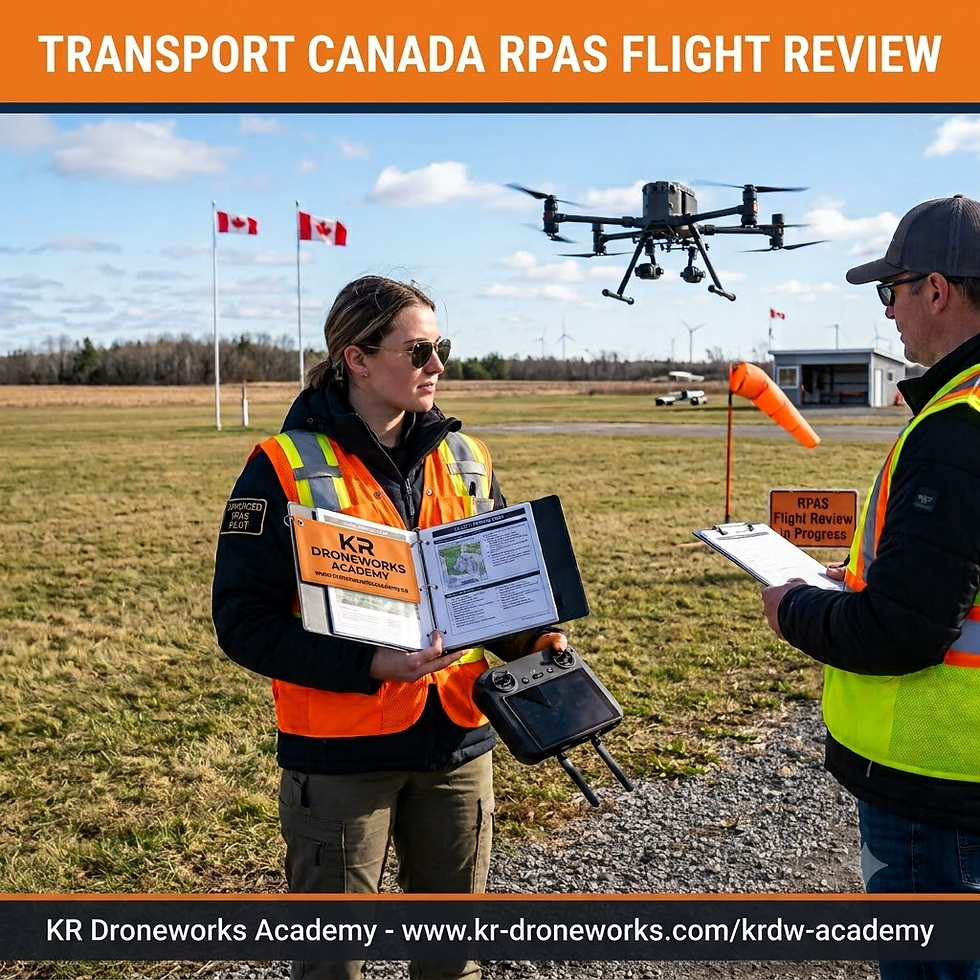
Pass a flight review.
Operate under an RPAS Operator Certificate (RPOC).
This increased level of operational complexity is exactly why CRM is being brought to the forefront. Flying a drone beyond your line of sight removes your most primary sensor—your eyes. You become entirely dependent on your system's data link, onboard cameras, and, critically, the information provided by your Visual Observers.
The Evolved Role of the Visual Observer (VO)
In many complex operations, particularly Extended Visual Line-of-Sight (EVLOS) flights which are a stepping stone to full BVLOS, Visual Observers are indispensable. The new regulations have refined the definition and requirements for a VO.
A Visual Observer is no longer just a friend tagging along to watch the drone. They are a trained and integral part of the flight crew. Their primary role, as defined in the Canadian Aviation Regulations, is to "maintain unaided visual contact with the airspace in which the remotely piloted aircraft is operating in a manner sufficient to detect conflicting air traffic and other hazards and take action to avoid them."
Crucially, the VO must communicate this information to the pilot in a timely manner. This is CRM in its purest form.
Clear Communication is Non-Negotiable: The pilot and VO must have established, clear communication protocols before the drone even takes off. Standard phraseology should be used to avoid ambiguity. A vague "There's a plane over there" is useless. A CRM-trained VO would say, "Pilot, traffic, Cessna, 3 o'clock, low altitude, converging."
Shared Mental Model: The pilot and VO need to share a mental picture of the operation. The VO needs to know the pilot's intended flight path to effectively scan the relevant airspace. The pilot needs to trust the VO's judgment and act immediately on their reports.
Training Requirements: For certain operations like EVLOS, the new rules specify that a VO must hold at least a Basic Pilot Certificate. This ensures they have a foundational understanding of airspace and aviation regulations, making them a more effective crew member.
Navigating the Standards: 922 and 923
Two key Transport Canada standards underpin the safety of advanced and complex operations. Understanding them helps you see where CRM fits into the regulatory framework.
Standard 922 - RPAS Safety Assurance
Think of Standard 922 as the "trust your gear" standard. It sets out the technical design and performance requirements for drones intended for Advanced and Level 1 Complex Operations. It covers things like:
System Reliability: Ensuring no single failure can lead to a catastrophic outcome.
Containment: The drone's ability to stay within its designated operational volume.
Environmental Envelope: The weather conditions (wind, temperature) the drone is tested to handle safely.
Human-Machine Interface: Designing controls and alerts to minimize pilot error—a direct link to CRM principles.
Manufacturers declare that their drones meet these standards. When you fly a Standard 922-compliant drone, you are relying on its engineered safety features as a primary resource.
Read the full text of Standard 922 here: Standard 922 - RPAS Safety Assurance
Standard 923 - Vision-Based Detect and Avoid
Standard 923 is where the human element—and CRM—takes centre stage. This standard applies to operations where the drone itself might not meet all the high-tech redundancy requirements of Standard 922. Instead, the safety of the operation relies on a human crew using their eyes to "detect and avoid" other aircraft.
This standard explicitly spells out the requirements for using visual observers to create a safety buffer. It dictates:
Distances: The maximum distance between the pilot/VO and the drone.
Visibility: Minimum weather requirements for the crew to see effectively.
Roles: The absolute necessity for the VO to detect hazards and for the pilot to take avoiding action based on that information.
Successful flight under Standard 923 is impossible without effective Crew Resource Management. The pilot and VOs must function as a cohesive unit. The pilot's trust in the VOs, and the VOs' assertiveness in communicating threats, are the primary safety mechanisms. If communication breaks down, the safety case for the entire flight collapses.
Read the full text of Standard 923 here: Standard 923 - Vision-Based Detect and Avoid
Conclusion: What Transport Canada Wants You to Know
The message from Transport Canada is clear: as the drone industry matures, so must its pilots. The ability to manipulate the controls is just the baseline. The future belongs to operators who can manage risk, lead a team, and make sound decisions in dynamic environments.
CRM is not just another acronym to memorize for an exam. It's a professional mindset. Whether you're flying a simple mission by yourself or a complex EVLOS flight with a team of observers, applying CRM principles will make you a safer, more effective, and more professional pilot. Embrace it, train for it, and make it a core part of your flying culture. The sky is opening up, and CRM is your key to navigating it safely.
References
Transport Canada. (2023). Best practices for crew resource management training. Retrieved from https://tc.canada.ca/en/rail-transportation/publications/best-practices-crew-resource-management-training
Transport Canada. (2025). 2025 Summary of changes to Canada's drone regulations. Retrieved from https://tc.canada.ca/en/aviation/drone-safety/2025-summary-changes-canada-drone-regulations
Transport Canada. (2025). Getting a drone pilot certificate. Retrieved from https://tc.canada.ca/en/aviation/drone-safety/drone-pilot-licensing/getting-drone-pilot-certificate
Government of Canada. (2025). Canadian Aviation Regulations (SOR/96-433), Standard 922 - RPAS Safety Assurance. Retrieved from https://tc.canada.ca/en/corporate-services/acts-regulations/list-regulations/canadian-aviation-regulations-sor-96-433/standards/standard-922-rpas-safety-assurance
Government of Canada. (2025). Canadian Aviation Regulations (SOR/96-433), Standard 923 - Vision-Based Detect and Avoid. Retrieved from https://tc.canada.ca/en/corporate-services/acts-regulations/list-regulations/canadian-aviation-regulations-sor-96-433/standards/standard-923-vision-based-detect-avoid
Government of Canada. (2025). Canadian Aviation Regulations (SOR/96-433), Section 901.20 - Visual Observer. Retrieved from https://laws-lois.justice.gc.ca/eng/regulations/SOR-96-433/section-901.20.html


Comments